Early in my career, I thought senior designers were simply faster than everyone else. They seemed calm in meetings. They had answers ready. Their managers trusted them with visible work. When priorities shifted, they rarely looked surprised. Over time, I realized something less glamorous. They were not calm because the work was easy. They were calm because they had systems.
If you are a product designer on a team, you are not only responsible for the design output. You are also responsible for making your work easier to understand, track, support, and protect. You represent the design team every time you join a project, give an update, flag a risk, or ask for a decision. This is where many strong designers struggle. They are talented, thoughtful, and eager to take on more, but they lose track of timelines because they never built one with intent. They say yes too quickly. They surface risk too late. They do the work, but their lead designer or manager has no clear view of whether the work is healthy.
The outcome becomes predictable. Overwhelmed designers. Late escalation. Rushed decisions. Work that ships without enough space to ask the real question: is this the right solution for the user and the business?
A workback plan helps solve this
It gives your work shape before the pressure arrives. It creates space for feedback, decision-making, and trade-offs. It helps your manager see where support is needed before everything becomes urgent. The “got it together” feeling does not come from confidence. It comes from visible signals.
A clear end goal. A plan that maps to that goal. Early risk flags. Updates people can scan. Trade-offs made before priorities collapse. That is how you show seniority through execution, not job title.
Principle 1: Work backward from the finish line, not forward from the brief
When you get briefed on a project, the natural instinct is to start moving. Open Figma. Create frames. Pull references. Sketch the first version. That feels productive, but it can create a problem. You may look busy, but nobody can tell if you are on track. Worse, your manager has no leverage if risk shows up late. At that point, the only option is damage control. Your first deliverable should not always be a wireframe. It should be a workback plan.
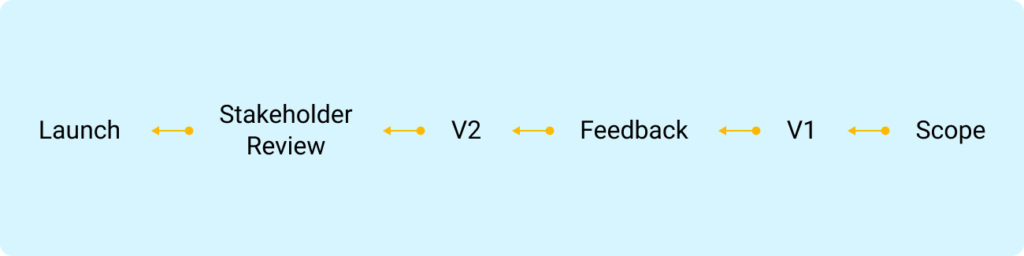
A workback plan starts from the moment your work needs to land. That might be a leadership review, a product decision, a stakeholder approval, a development handoff, or a launch. From there, you work backwards and define what needs to be true each week to make that moment possible. This is not just personal organization. It is a managing-up move. When you show a product manager, business analyst, or lead designer a workback plan, you are giving them something they can respond to. You are showing what is realistic, where decisions need to happen, and where scope needs to be protected. You should expect pushback. Sometimes a timeline has already been promised before design has assessed the work. That does not mean you compress your plan quietly and inherit the risk.
It means you bring the trade-offs into the open.
If the project needs to land sooner, ask what can change. Can scope reduce? Can reviews combine? Can the quality bar shift? Can a later phase absorb some of the work? Can a stakeholder decision happen earlier? The point is not to defend your timeline emotionally. The point is to make the path visible.
Example: For a six-week project, the plan might look like this
Week 6: Final moment of truth
- Present in the key stakehoder meeting (or whatever forum represents “senior visibility”)
- Confirm the decision you need from that forum
Week 5: Lock the story
- Final changes
- Lock the presentation and narrative
- Pre-brief your manager on what will be shown and what you are asking for
Week 4: Version 2 checkpoint
- Review your second version
- Schedule a manager check-in focused on: “Are we aligned on direction and risk?”
Week 3: Stakeholder feedback round
- Run a feedback round with key stakeholders
- Capture decisions and trade-offs
- Identify any cross-team tension early
Week 2: Version 1 review
- Review your first version
- Schedule a manager check-in focused on: “Is this credible and does it meet the end goal?”
Week 1: Scope and set the lanes
- Confirm the end goal and what success looks like
- Finalize scope, assumptions, constraints, and dependencies
- Identify who must be involved and when
Why this reads as “they’ve got it together”
Because you are creating predictability. You are showing that you understand:
- What matters at the end
- What needs to be true each week for that end to happen
- Where your manager needs to show up
Principle 2: Flag early when in doubt (early equals options)
Early flagging is not about anxiety or over-communication. It is about creating options while the work is still shapeable. As a product designer, you are not operating alone. You are part of a design team accountable for delivering the right user experience while balancing product goals, business needs, and technical constraints.
Your manager should not need to attend every meeting with you. That is not scalable. You are an extension of your design lead or manager, which means you participate, lead, represent design clearly, and bring risks back when they matter.
The simple rule:
- Early flagging gives your manager options.
- Late flagging forces damage control.
Every manager has a different “flag line”. Your job is to learn it, then default to flagging earlier than you think you need to.
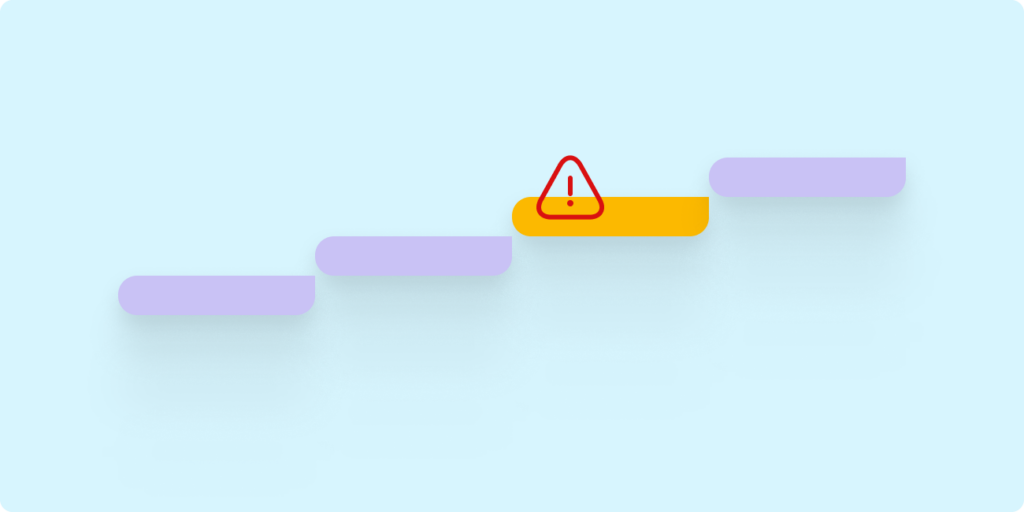
A deadline might slip. You may have said yes to something you should not have. A stakeholder may be misaligned. A dependency may be shaky. Money may be involved. Your work may be heading into a senior review before your manager knows what is being shown. Those are not small details. Those are signals. When you flag, do not send a vague message like, “I think this might be a problem.” Make it easy to act.
The simplest early-flag message template
Subject line: Risk / decision needed
- What changed: (one line)
- Impact: (one line)
- Options: (2 to 3 bullets)
- Recommendation: (one line)
- Decision needed by: (date or meeting)
This shows judgment. You are not handing your manager a mess. You are bringing the situation, the risk, and a recommended path forward.
Principle 3: Make your updates scannable (because people do not read)
People do not read as carefully as we wish they did. That is not an insult. It is reality. Your manager may be moving between meetings, Slack or Teams messages, stakeholder asks, roadmap conversations, and people management. If your update is hard to parse, the important part will get missed.
Scannability is not a writing style. It is a decision tool. Long updates do not fail because they are long. They fail because they do not make it obvious what you need, by when, and what happens if nobody responds.
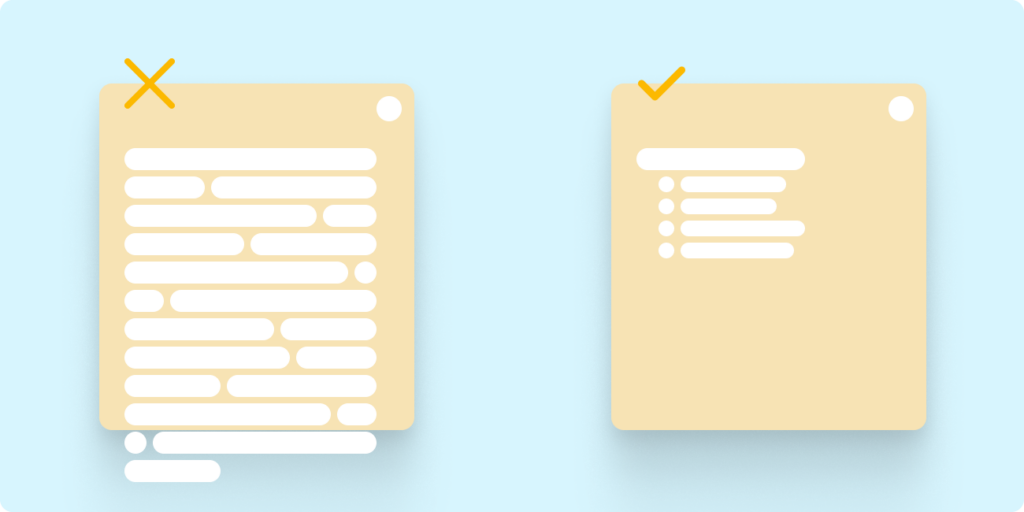
This matters even more in meetings.
If a meeting invite has no description, the group spends half the time reconstructing context, then leaves without a decision. You can prevent that with a short briefing in the invite or at the top of your notes.
A strong meeting description answers a few things quickly:
- Outcome: what should be true when we leave
- Context: what changed, what is constrained, what has already been decided
- Pre–read: links and what to look for
- Agenda: three items max
- Decisions needed: one to three bullets
- Who needs to be there: names and why
- If you cannot attend: what input is needed asynchronously and by when
If you only do one thing, write the outcome and the decisions needed. That alone prevents most meetings from becoming a rehash. For Slack or Teams, use consistent labels. You are training people to recognize your pattern.
A simple update might look like this:
- Status: At risk
- This week: Completed stakeholder feedback round and synthesizing themes
- Risk: Analytics dependency is slipping by one week
- Ask: Can you help unblock this with the Analytics lead?
- Next milestone: Version 2 manager check-in on Thursday
That takes less than ten seconds to understand. That is the goal.
Principle 4: Have smart reprioritization chats (do not wait to be prioritised)
Most managers do not want to micromanage your queue. They want confidence that you are spending time on the right things. Prioritization works best as a partnership, but you need to do the thinking first. Do not show up with a vague list of tasks and ask, “What should I do?” Show up with a point of view.

A useful conversation starts like this:
“Here is how I’m prioritizing. Does this still map to what matters?”
Then show your current split. What are the top two or three priorities? What is moving more slowly? What is parked? What percentage of your time is going where?
For example, you might say:
Task A is taking 20 percent of my time as support work. Task B is taking 70 percent as the primary focus. The remaining 10 percent is overhead, reviews, and team support.
Then ask the question that makes it collaborative:
“If Task A is more important right now, what should we reduce or pause to make room?”
That question changes the conversation. You are no longer absorbing more work silently. You are helping your manager adjust the mix. When you see a delay coming, bring options, not just the problem. Restructure the work first. Look at sequencing, scope, ownership, and dependencies. Bring two or three credible options, explain what each one protects, and recommend a path.
Then ask for validation. That is the difference between waiting to be managed and managing up.
Organization does not fix every broken system
There is an important caveat here. Good planning does not fix unrealistic leadership. It does not fix a chaotic culture. It does not make under-resourced teams magically healthy. Some environments will still create impossible conditions.
But strong organization helps you separate a planning problem from a business problem. If something fails, you want clarity on why. Was the scope too large? Was the deadline unrealistic? Was a dependency missed? Was feedback late? Was there no decision-maker? When your work is structured, the answer is easier to find. That protects you, your manager, and the quality of the work.
Make it boring in the best way
One thing I learned over the years is that seniority is rarely announced. People feel it through consistency. Through clarity. Through how predictable you become under pressure. The designers who build trust fastest are usually not the loudest people in the room. They are the people who reduce uncertainty for everyone around them.
A workback plan is not glamorous. Early flagging is not dramatic. Scannable updates will not make anyone clap in a meeting. But they work. They help your manager support you. They help your team trust you. They help stakeholders understand what is happening and what decisions they need to make.
And, most importantly, they create enough space for better design decisions. If you are a product designer trying to grow into more ownership, start here. Build the plan. Flag early. Make your updates useful. Bring options when priorities shift. That is how you look organized. That is how you protect the work. And that is how you start leading before the title catches up.
If this topic resonates with you, or if you are working through how to manage up more effectively in your own design role, feel free to connect with me on LinkedIn or reach out through my website contact form.